You’ve got a Slack workspace with 847 members. Your Discord...
Read More



International SEO Strategy: Common Mistakes SaaS Companies Should Avoid
A market research study projects that the global SEO market...
Read More

How to Create Sales Enablement Content for Every Stage of the B2B Buyer’s Journey
According to Gartner’s 2026 sales survey, 67% of B2B buyers...
Read More
How B2B Podcast Marketing Builds Authority and Drives Pipeline
Podcasting has become an increasingly important channel for brands looking...
Read More
How B2B Video Marketing Improves Brand Trust and Sales Conversions
Think about the last time you considered buying a B2B...
Read More
You Don’t Know You are Scaling Until the Questions Change
A founder asks, ‘Can we do it?’ A scaling company...
Read More
Schema Markup for SEO: Essential Structured Data Every B2B Website Needs
According to the July 2026 Schema.org usage dataset, 5,545 Schema.org...
Read More
How a Sportsman’s Mindset Shapes Business Growth
What can building a business learn from building an athlete?...
Read More
How to Build a LinkedIn Marketing Strategy That Generates High-Quality B2B Leads
A strong LinkedIn marketing strategy is necessary if you want...
Read More
The Ultimate List of AI Search Optimization Tools for 2026
Your brand’s reputation is now stored in a new algorithm...
Read More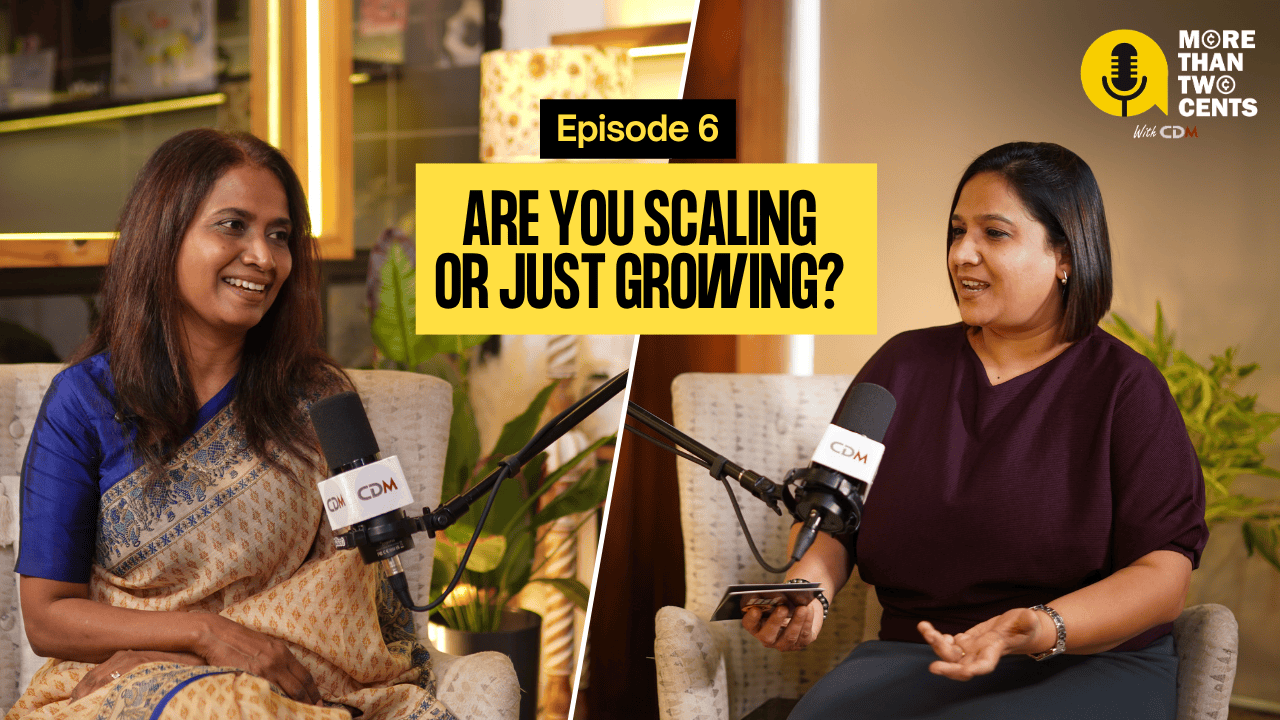
A founder asks, ‘Can we do it?’ A scaling company starts asking, ‘Can we do it repeatedly?’ It sounds like a small change in wording, but it signals a much bigger shift in how a business operates.
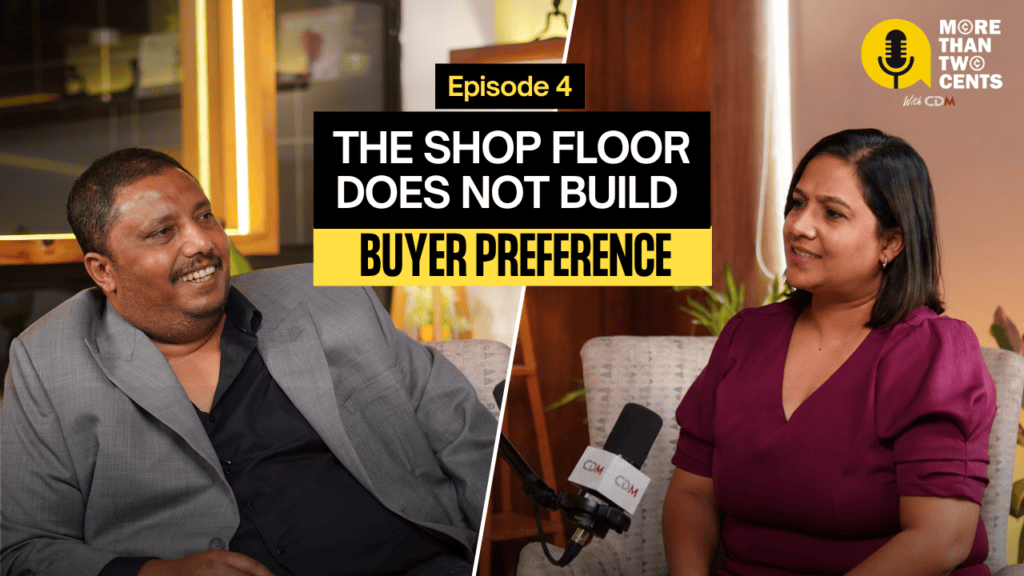
For Smita Yedekar, a first-generation serial entrepreneur who has built two technology businesses and successfully exited one, that shift is at the heart of the startup-to-scale-up journey. In a conversation with Sujata Upadhyay on More Than Two Cents with CDM, she explains why there is no revenue figure, headcount or customer milestone that suddenly tells a founder, ‘You are now a scale-up.’ The transition is gradual and often only becomes obvious in hindsight. What changes first is not necessarily the size of the business, but the way it thinks and makes decisions.
When ‘Can We?’ Becomes ‘Should We?’
Early-stage companies are built around possibility. A customer asks for a feature, a prospect wants a custom solution, or a new opportunity appears, and the natural response is often to say yes and figure out how to make it happen. That flexibility can be an advantage when a company is still discovering its product and market.
But as the business grows, that instinct can become a liability. When an enterprise customer asks for something new, the question eventually stops being, ‘Can we build it?’ and becomes, ‘Should we build it?’ Does it fit the direction of the product? Does it serve the market the company wants to pursue? Is the opportunity worth moving resources away from other priorities?
That is a very different way of operating. Customer-centricity does not mean building everything a customer asks for. It means understanding the customer’s problem well enough to decide what belongs in the business and what does not.
Growth Problems Are Usually More Specific Than They Look
The same thinking applies when growth slows. The instinct is often to assume that the business needs more leads, more marketing or more sales activity. But Smita’s advice is to look deeper and find where the funnel is actually leaking.
A company may have a healthy pipeline but struggle to convert prospects because of pricing, competition or an ineffective sales process. It may be closing deals successfully but losing customers because of problems with the product or service delivery. Each problem requires a different response. Simply declaring that ‘growth has slowed’ does not tell you what needs fixing.
There is another trap here: assuming that growing revenue automatically means a healthier business. Smita separates revenue numbers from what she calls the business’s health numbers. Customer acquisition cost, attrition, gross margins, cash flow and unit economics can reveal problems that a rising top line hides. If the underlying economics do not work, scaling the business simply scales the losses.
The Founder Has to Become Less Essential
Perhaps the hardest part of scaling is moving knowledge out of the founder’s head.
Founders develop instincts through years of customer conversations. They know which objections matter, when to push a prospect, how to position an offering and when an opportunity is unlikely to close. But those instincts cannot remain personal knowledge forever.
They need to become organisational knowledge. Customer conversations can be discussed with the team. Common objections can be documented. Checklists, messaging frameworks and practical examples can turn experience into something others can use.
The same principle applies to leadership. Startup teams often thrive in ambiguity. They are comfortable hearing, ‘We don’t know yet,’ and figuring things out. But a scaling organisation needs leaders who can make decisions independently and create structure without waiting for the founder to solve every problem.
Smita puts it simply: if every problem still comes back to the founder, the company isn’t scaling.
Scale the Business, Not the Chaos
Before pushing aggressively into growth, Smita highlights three areas founders need to get right: their ideal customer profile, their leadership team and their unit economics.
Knowing the ICP means understanding not just who uses the product, but who actually buys it and has the authority to make that decision. Building the right leadership team means developing people who can eventually outgrow the founder and make sound decisions without constant intervention. And understanding unit economics ensures that growth is actually creating a healthier business rather than simply making an unhealthy model bigger.
Her own experience reinforces why these questions matter. In one of her earlier ventures, she realised that pursuing large enterprises created plenty of interest but did not necessarily create demand. The lesson was simple: a busy funnel is not the same as a productive one.
That idea also comes through in her rapid-fire advice to founders. What should they keep in their startup backpack? Comfort with ambiguity. What growth mistake should they avoid? Confusing activity with demand. And the one word she would ban from a founder’s vocabulary? Hustle.
“Hustle is not a strategy.”
Perhaps that is the real distinction between a startup and a scale-up. Scaling isn’t about doing more things, faster. It is about becoming more deliberate about what deserves to be done, who should do it, why it matters and whether the business can keep doing it without depending on the people who built it.
The startup asks, ‘Can we do it?’ The scale-up asks, ‘Can we repeat it?’ And eventually, the mature organisation asks the hardest question of all: ‘Can it work without me?”
Watch the full conversation with Smita Yedekar and Sujata Upadhyay on More Than Two Cents with CDM to hear the experiences, mistakes and lessons behind that transition.