CDM Media Group – Content as a Service Provider

Steps to Create Answer Engine Optimized Content That Gets Discovered Faster

AEO content optimization

Have you noticed how Google can answer your complex, specific queries when you search? In most cases, thanks to featured snippets and AI overviews. And when you want to dig deeper with follow-up questions, tools such as ChatGPT, Gemini, and Meta AI are ready to step in, with more emerging every day.  For everyday users, this means research has never been easier. But for SEO professionals, the story is far more demanding; they work relentlessly behind the scenes to get content ranked for the very queries you type into Google. The rise of content discovery in AI search is introducing fresh challenges to the world of content optimization for AI answers, making an already complex field even more intricate.  This practice focuses on structuring website content to deliver clear, direct answers to user queries, increasing the likelihood of being featured in SERP elements such as ‘People Also Ask boxes’, rich snippets, and similar placements. We will break down the core concept of Answer Engine Optimization and explore practical ways to implement it effectively. What is an Answer Engine? Answer engines are AI-powered technologies that leverage natural language processing to deliver precise, direct responses to user queries. Rather than presenting a list of search results to browse through, an answer engine cuts straight to the point, whether you’re searching for a recipe, seeking a specific fact, or checking the weather. Where Are Answer Engines Used? Answer engines power a variety of everyday digital experiences. Voice assistants such as Siri, Google Assistant, and Alexa rely on them to retrieve and deliver spoken responses to user questions. On search engines, features like top-ranking rich snippets and AI overviews use answer engine technology to pull data and generate concise, relevant summaries directly on the results page. Types of Answer Engines Understanding what type of content AI answer engines prefer is key to knowing how to optimize your content for each: Best Practices for Answer Engine Optimization To practice AEO content optimization, focus on curating content that is easy to read and crawl for AI assistants. You can consider looking at what people usually search on AI bots or ask voice assistants.  Understand the User’s Intent User intent, also known as search intent, is the primary motive behind the queries users make on the internet. Is it really well known that there are four main types of search intent: To offer relevant and useful content optimization for AI answers, you should focus on understanding the intent of the search query. Tools like Google Keyword Planner and Ubersuggest can help you learn the intent behind the keywords that you are targeting. Once you know which search terms your website ranks for, you can dive deeper into the research to learn about the popular related terms, FAQs, etc.  Let’s understand this with an example. Suppose your keyword is ‘Tips to Rank on AI Search.’ With this, it’s clear that the user is searching for tips. If you clearly set out the steps in your content simply and straightforwardly, content optimization for AI answers.  Be Straightforward and Concise  You want to make sure your website’s content is up to the mark and answers all the questions your audience might have. That’s a great goal to start with! To achieve this, focus on providing high-quality, concise answers. You don’t need to beat around the bush or give unnecessary information. Make sure your answers are accurate, up to date, and relevant to your audience’s needs. And don’t forget to keep it concise! This will help you appear in the featured snippet (the first organic result in organic searches). There is one more important thing to note. With voice search on the rise, it’s more important than ever to provide concise, accurate answers. So, make sure you optimize your content for voice assistants like Siri, Alexa, and the Google Assistant. Use Long Tail Keywords  In AEO, long-tail keywords play a crucial role in helping you provide specific answers to users’ questions. When you incorporate these keywords into your content, you can increase the likelihood that your answer will be selected as the best response. This is because long-tail keywords are specific phrases or questions that users ask when searching for answers. These keywords are often more detailed (highly specific) and less competitive than generic keywords. For example, if you’re creating content about AEO, a generic keyword would be ‘AEO.’ However, a long-tail keyword would be “What type of content do AI answer engines prefer?” By incorporating this long-tail keyword into your content, you can provide a more accurate, relevant answer to users searching for that specific information. Using long-tail keywords in AEO content optimization can have several benefits. Firstly, it allows you to provide more accurate answers to users’ questions. By incorporating specific keywords, you can provide more relevant, detailed information that better meets the user’s needs. Secondly, long-tail keywords can increase the visibility of answers. By optimizing your content for specific keywords, you can increase the likelihood that your answer appears when those keywords are searched for. Finally, using long-tail keywords in AEO content optimization can improve user satisfaction. You can increase the chances of your answer being used by providing accurate and relevant answers.  Structured Data Structured data and markup play a crucial role in helping search engines understand the context and relevance of your content. Adding metadata to your content helps search engines understand it better and match it to user queries. By using structured data and markup, you are helping search engines in several ways. Firstly, entity recognition enables it to identify specific entities, such as names, locations, and organizations. It helps the answer engine understand the context of your content.  This is basically about defining relationships between entities, which also helps search engines better understand how your content fits into the broader knowledge graph. Start optimizing content for AI answers Content discovery in AI search is no longer just about rankings; it’s about becoming a trusted source of answers. As search evolves with AI, the

SEO vs AEO Content
What’s Changing in the Age of AI Search?
optimizing content for AI search engines

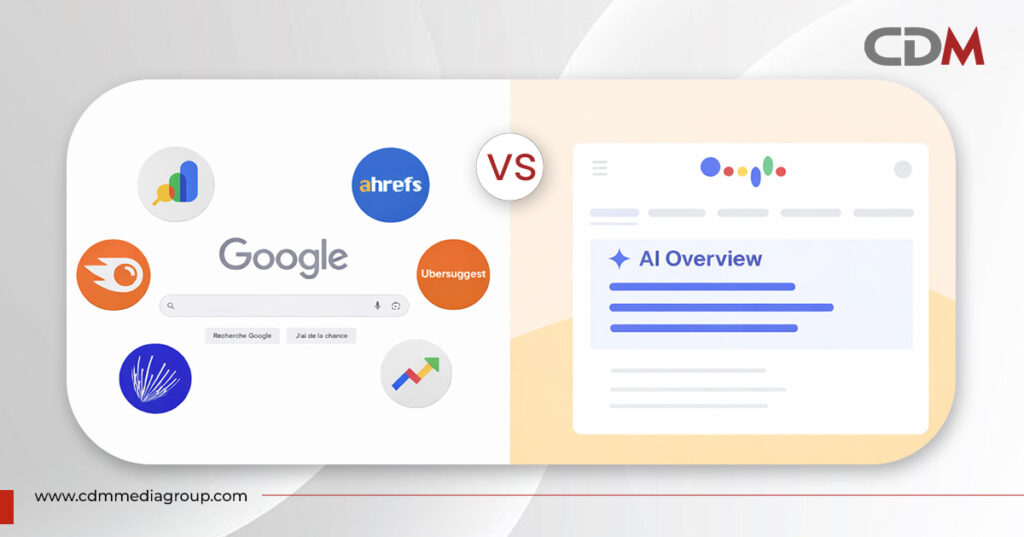
If you notice, the whole internet search process has been undergoing major transformations since Google launched in 1998. SEO best practices in 2026 have moved beyond keyword stuffing and mass link building, focusing instead on a consistent strategy that aligns with user intent and business goals.  Search is evolving beyond traditional Search Engine Optimization (SEO) toward Answer Engine Optimization (AEO), where content is designed to deliver direct, AI-generated answers across platforms like ChatGPT, Perplexity, Claude, and Gemini. According to the Conductor’s benchmark report, AI traffic accounts for just 1.08% of all website visits across 13,770 domains. Meanwhile, organic search continues to deliver 53% of traffic on this domain, with healthcare accounting for 42.4% and communication services for 39.6%.  Now, are you thinking about the major difference between SEO and AEO, and what organizations should actually be doing differently now? SEO vs AEO: Understanding the Core Concepts What is SEO? Think of SEO as the invisible infrastructure that determines whether your content gets discovered or ignored in a crowded digital ecosystem. It is a strategic discipline that aligns your content with how platforms such as Google and Bing retrieve, interpret, and prioritize information. Modern SEO goes beyond rankings to focus on semantic relevance, structured content, and authority signals. By making content optimized for algorithmic processing through techniques such as schema markup, it enables both search engines and AI systems to extract and present information accurately. Today, SEO is less about visibility alone and more about becoming a trusted source that powers answers. What is AEO? AEO reflects a fundamental shift in how digital visibility is earned and measured. Instead of optimizing for clicks, it focuses on ensuring content is directly surfaced as the most relevant response within AI-driven interfaces and voice-enabled environments. As platforms like Google and OpenAI increasingly prioritize instant answers, the emphasis moves from ranking to real-time content selection. This requires a disciplined approach to content design, centered on precision, structure, and intent alignment. By leveraging structured data, semantic clarity, and contextual depth, AEO enables content to be accurately interpreted and delivered as authoritative responses. The outcome is enhanced visibility, stronger credibility, and a sustained position as a trusted source in an AI-first search ecosystem. SEO vs AEO: Key Differences In short, SEO optimizes for the ‘Search Page,’ whereas AEO optimizes for the ‘Answer.’ The objective of both is to build trust, but the methods used to achieve this differ. Optimizing your Content with Structured Answers for AI Search AI chatbots don’t read a page top to bottom as a person would. They break content into smaller, usable, or important pieces, a process called parsing. These small pieces are what get ranked and gathered into structured answers for AI search.  Titles, Descriptions, and H1 Tag Example: 1. Title: “Best SEO Strategies for Small Business Websites” 2. H1: “SEO Plan That Helps Small Businesses Get Found Online” 3. Description:  A practical guide covering the necessary SEO strategies small businesses need to improve their online visibility, attract local customers, and compete with bigger brands without a big budget. Headings (H2s and H3s): Headings are HTML tags (<h2>, <h3>) that mark where one idea ends and another begins. For AI, they work like chapter titles that define structured answers for AI search. Example: Instead of an unclear heading like “Learn More,” use “Why is SEO Important for Your Website or Business?” Questions and Answer Formats Direct questions with clear answers show the way people search. Chatbots can often get these pairs word-for-word into structured answers for AI search responses. Example:  Q: How does this SEO tool compare to others in terms of speed? A: It crawls and analyzes your site in under 60 seconds, which is significantly faster than most SEO tools on the market. Lists and Tables Bulleted lists, numbering steps, and differentiation tables break complex details into clean, reusable portions. They’re especially effective for how-to queries and feature comparisons like the difference between SEO and AEO.  Weak Example Strong Example A blog post that repeats the same keyword 50 times but has no backlinks, slow load speed, and zero useful content. Major list of top 3 SEO features:Keyword Optimization Backlink Building Technical SEO How AI Engines actually Optimize your Blog Content for Generative AI search visibility AI doesn’t structure truth; it comes from web search. Key factors: If your content is small, unstructured, or lacks trustworthy sources, AI engines are less likely to optimize your blog content for generative AI search. Real-World Examples Let’s look at a few real-world examples to understand how industries are leveraging SEO and AEO effectively for the growing opportunity. 1. SaaS Enterprises Using SEO and AEO A SaaS company shifting from WordPress to Webflow AI (or another systematic content tool) to create content with an FAQ structure. They maintained SEO rankings and began showing up in AI responses for long-tail queries with structured answers for AI search. 2. SaaS Organizations Missing the AEO Opportunity Another enterprise used AI-generated content for landing pages without verification, expert voices, or a structured format to optimize blog content for generative AI search. As a result, competitors with stronger structure and authorities to start working in AI answers; this company lost visibility both in SERPs and in structured answers for AI search for some search categories. Ready to Transform SEO Into AEO Visibility Your content strategy must develop to stay visible in the age of AI search. At CDM Media Group, offer effective SEO and AEO solutions designed for ambitious B2B brands. We see them as two equal parts: the foundational SEO and the future edge AEO. Both matter because the way people search is changing, but their requirement for trustworthy, authoritative answers has never been higher.

Code Red ChatGPT Upgrades: GEO Content Structure for Enterprise Lead Generation

AI-driven lead generation

Sam Altman’s internal memo marked ‘code red’ wasn’t about a system failure. It was a warning: AI competition is reshaping how prospects find you. And if your enterprise lead generation strategy doesn’t account for this shift, you are already behind. The stakes are real. ChatGPT message volume has grown 8x since November 2024, with enterprise workers reporting they save up to an hour daily using AI for research. People aren’t just asking ChatGPT casual questions anymore, they are trusting it to answer critical business decisions. Your content now competes not for clicks, but to be cited by AI. This is where GEO (Generative Engine Optimization) enters the picture. For enterprises betting on lead generation, this is make-or-break territory. ChatGPT Code Red: The Fundamental Shift Traditional SEO assumes people actively search for solutions. That model is incomplete: at any given time, only about 5% of your target market is actively in-market to buy, while the remaining 95% are not yet evaluating solutions. They will engage with information earlier in the journey or later when they enter the buying window. And as discovery increasingly includes AI tools like ChatGPT, search alone may not reach buyers early enough. Here is what keeps executives up at night; only 12% of URLs cited by ChatGPT, Perplexity, and Copilot actually rank in Google’s top 10 search results. Your SEO rankings barely correlate with AI visibility. You could dominate traditional search and remain completely invisible to AI systems pulling answers for prospects. ChatGPT now serves 800 million users weekly. Enterprise adoption has moved past ‘experiment’ to ‘critical infrastructure. ’The platform recently integrated connectors for SharePoint, Dropbox, Google Drive, Outlook, and Teams. This means your prospects are using AI agents to research vendors, evaluate solutions, and compare options. Your content will appear in those AI-generated reports or it won’t. Enterprise Lead Generation with AI: The New Framework So how do enterprise teams actually leverage AI-driven lead generation today? Through a three-pillar strategy: AI-Driven Lead Generation: Making It Concrete Let’s get specific about what AI-driven lead generation looks like for geographic markets. Most enterprises serve multiple regions with distinct buyer profiles. A VP of Security in Austin has different regulatory concerns than one in Singapore. They ask different questions. They have different decision criteria. Geographic content structure means creating region-specific content addressing local market needs using question-based formatting that AI platforms can extract easily. This isn’t about writing separate websites, it’s about topic clustering within your existing content architecture. One pillar topic with multiple sub-clusters, each addressing geographic or contextual variations, linked back to establish topical authority. Test it yourself: Ask ChatGPT a question your prospects in each market would ask. Does your brand appear in the response? If not, increase volume and distribution in that region. The Metrics That Actually Matter Now By 2024, 84% of B2B companies planned to integrate AI into their lead generation strategies, with companies reporting efficiency increases up to 50%. But efficiency is just one metric. Your real KPIs have changed: These don’t appear in Google Search Console. They require tracking mentions across ChatGPT, Perplexity, Google AI Overviews, and proprietary monitoring tools. ChatGPT Code Red in Practice: Implementation Steps Here’s the workflow enterprise teams are following: First, audit content structure. Structured content with clear headings and lists works almost as well as Q&A format for AI extraction, while dense prose performs worst. Where are your key insights buried? Second, establish topical authority through clustering. Choose pillar topics and create sub-content clusters that reinforce knowledge. Link internally to help AI recognize your domain as a thought leader. Third, distribute aggressively. Medium, LinkedIn, industry publications, forums. The broader your distribution, the more likely AI platforms cite you. Finally, measure visibility. Tools now exist to track your appearance in AI responses for target queries. Enterprise Lead Generation with AI: The Competitive Reality Companies winning right now aren’t just updating content, they are restructuring how they create it. They are thinking about how LLMs parse information. These are distributing across channels AI actually references. They are measuring AI visibility alongside traditional metrics. The gap between early adopters and everyone else is widening, not closing. Younger users now turn to AI for content discovery, while 47% of brands have not adapted their strategies. Applying GEO strategies can increase visibility in generative answers by approximately 40%. That’s massive for enterprise lead generation. When prospects see your company cited in a ChatGPT response, they are seeing an AI’s judgment about authority, not just a search ranking. The Urgency is Real The ‘code red’ memo wasn’t about panic. It was about clarity. The rules changed fundamentally. The question now is whether your enterprise lead generation strategy changed with them. If it hasn’t, your competitors are already being cited in prospects’ AI conversations. And that’s a visibility gap that’s getting exponentially harder to close. The time to move isn’t next quarter. It’s now. Ready to Transform Your Enterprise Lead Generation with AI? Your content strategy needs to evolve as fast as technology. At CDM Media Group, we specialize in building GEO-optimized content architectures designed specifically for enterprise lead generation in the AI era. We help you audit your current visibility in ChatGPT and generative platforms, restructure your content for AI discovery, and execute geographic-targeted distribution strategies. Don’t let your competitors get cited first. Connect with our team today to discuss how to position your enterprise as the authoritative choice across ChatGPT, Perplexity, and emerging AI platforms.

CDM Media Group - Content as a Service Provider

Get In Touch