A market research study projects that the global SEO market...
Read More



How B2B Podcast Marketing Builds Authority and Drives Pipeline
Podcasting has become an increasingly important channel for brands looking...
Read More

How B2B Video Marketing Improves Brand Trust and Sales Conversions
Think about the last time you considered buying a B2B...
Read More
You Don’t Know You are Scaling Until the Questions Change
A founder asks, ‘Can we do it?’ A scaling company...
Read More
Schema Markup for SEO: Essential Structured Data Every B2B Website Needs
According to the July 2026 Schema.org usage dataset, 5,545 Schema.org...
Read More
How a Sportsman’s Mindset Shapes Business Growth
What can building a business learn from building an athlete?...
Read More
How to Build a LinkedIn Marketing Strategy That Generates High-Quality B2B Leads
A strong LinkedIn marketing strategy is necessary if you want...
Read More
The Ultimate List of AI Search Optimization Tools for 2026
Your brand’s reputation is now stored in a new algorithm...
Read More
The Shop Floor Does Not Build Buyer Preference
A manufacturing company can have excellent products, strong engineering capabilities,...
Read More
Topical Authority in 2026: Creating Content AI Models Trust
Over 96.55% of all pages in our index receive zero...
Read More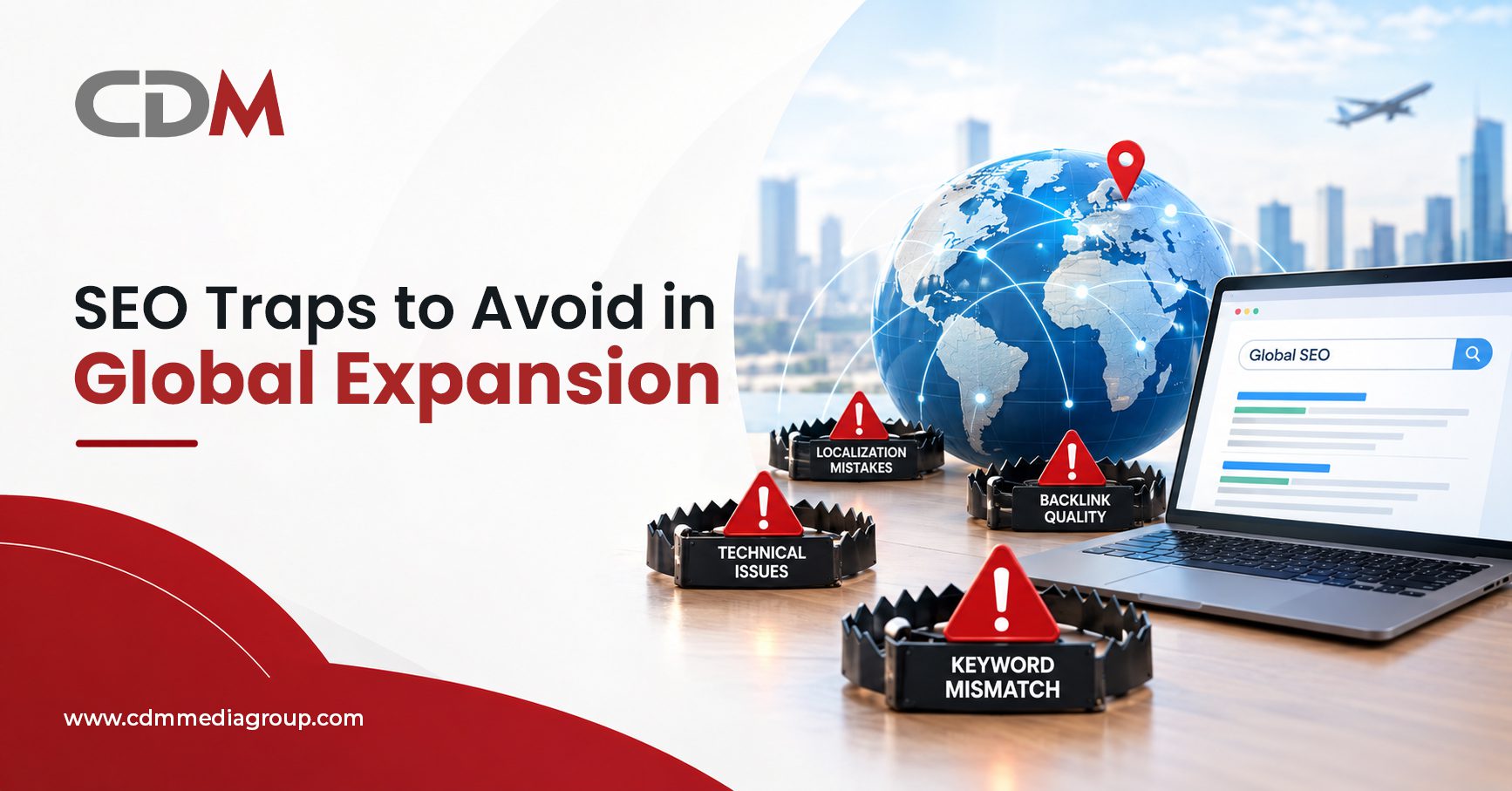
A market research study projects that the global SEO market will reach USD 3437.41 million in 2025 and USD 22722.03 million in 2033, growing at a compound annual growth rate (CAGR) of 26.63% between 2025 and 2033.
Growing your SaaS business beyond your home market can open the door to new customers, revenue streams, and opportunities. But entering international markets requires more than identifying target countries and competitors. You also need an international SEO strategy that helps your website appear in the right search results, reach local audiences, and compete effectively in each market.
Once you’ve defined your SaaS expansion strategy and chosen the countries you want to target, the next step is to determine how to structure your website and SEO efforts for global visibility.
Guide to international SEO strategy
International SEO is about helping your website show up in search results across different countries and languages.
It can include getting backlinks from trusted websites in your target markets, creating content that speaks to local audiences, and setting up your website so search engines can understand which content is meant for each country or language.
It’s different from regular SEO and local SEO, which usually focus on a single market or location. For SaaS companies looking to grow internationally, SEO needs to support visibility across multiple countries and, in some cases, different language groups.
Here are the key benefits of using an international SEO strategy:
- Improved search visibility in your target countries
- Increased website traffic from international audiences
- A competitive advantage by entering emerging markets before your competitors
Start Your International SEO Strategy
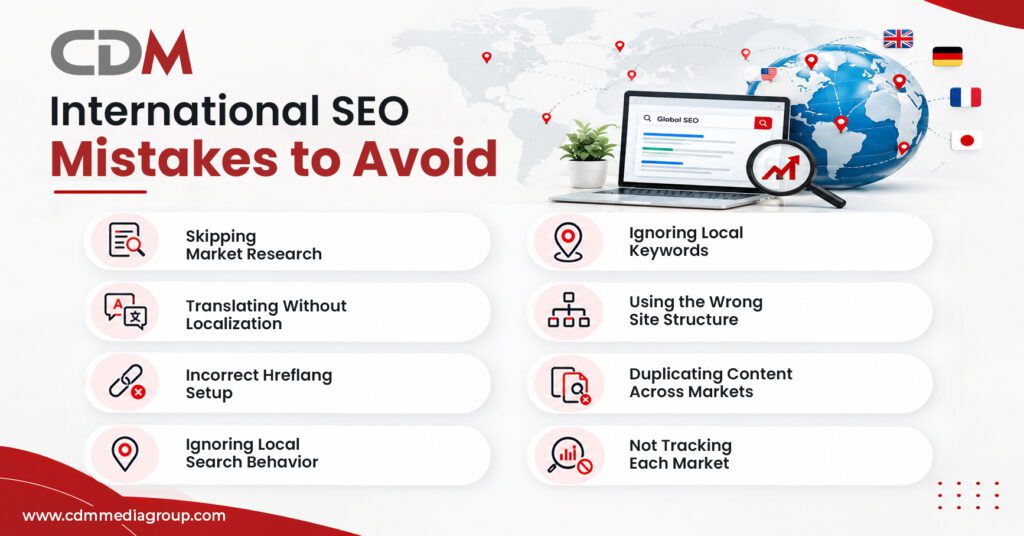
An effective international SEO strategy helps businesses reach customers across different countries by localizing their website and content to local search behavior. Simply translating your website is not enough; each market has different keywords, preferences, competitors, and search trends.
1. Identify Target Markets
Start by finding countries with a strong demand for your products or services. Then you can analyze organic traffic, search volume, competition, and business potential to prioritize the most valuable markets.
2. Conduct Local Keyword Research
Research keywords separately for each country. Avoid direct translations because people may use different words and phrases to search for the same product or service. Also, you need to analyze multilingual SEO using local search volume, competitor research, and long-tail keywords.
3. Choose the Right Website Structure
Select a structure that clearly separates your international markets. You can use country-code domains, subdomains, or subdirectories.
For example, example.com/in/ can be used for India and example.com/uk/ for the UK.
4. Localize Your Content
You have to adapt your content to the local audience rather than simply translating it. For multilingual SEO, you need to consider local language, currency, cultural references, customer expectations, and regional terminology. This makes your content more useful and relevant to your audience.
5. Implement hreflang SaaS (HTML Tags)
Use hreflang SaaS to help search engines understand which language and regional version of a page should appear for specific users.
Your hreflang markup (HTML tags) would look like this:
<link rel=”alternate” hreflang=”en-US” href=”https://yourwebsite.com/us/” />
<link rel=”alternate” hreflang=”en-GB” href=”https://yourwebsite.com/uk/” />
6. Build Local Authority
Build backlinks from relevant websites, publications, directories, and industry organizations within your target markets. Local links can improve your regional search visibility.
7. Monitor Performance
Track organic traffic, keyword rankings, conversions, and engagement separately for each country. Use these insights to identify opportunities and improve underperforming pages.
Common SEO mistakes SaaS companies should avoid
SEO mistakes can make it harder for your website to show up in search results. Problems like duplicate content, slow pages, poor mobile design, and weak keyword research can all affect your rankings and reduce the number of people who find your site.
The good thing is that most of these issues can be fixed. You just need to know what to check. Here are some common SEO mistakes to watch out for:
- Duplicate content: Using the same or very similar content on different pages can confuse search engines about which URL should appear in search results.
- Slow page speed: If a page takes too long to load, visitors may leave before it even opens. Slow websites can also lead to a poor user experience.
- Poor mobile optimization: Your website should work properly on mobile devices. If users have to zoom, scroll sideways, or struggle with the navigation, you have a mobile optimization problem.
- Keyword stuffing: Repeating the same keyword to rank higher often makes the content awkward and difficult to read. Use keywords where they make sense and focus on writing for the reader.
- Weak title tags and meta descriptions: These are often the first things users see in search results. Make them clear and relevant so people know what your page is about and have a reason to click.
- Broken links: Links that lead to missing or unavailable pages can frustrate visitors. They can also make it harder for search engines to crawl your website. Check your links regularly and fix or remove broken ones.
- Thin content: A page with very little useful information is unlikely to satisfy someone who lands on it. Make sure each page answers the user’s question or gives them something genuinely useful.
- Ignoring local SEO: If you run a local business, don’t overlook searches from people in your area. Keep your business details up to date and optimize your website for relevant local searches.

Final Thought
How SaaS companies should approach international SEO expansion, and these are common mistakes SaaS businesses should avoid when running an international SEO strategy. A structured campaign that avoids the above errors will deliver quick, smooth SEO results. Your SaaS business will successfully attract more clients through such systematic multilingual SEO.
CDM Media Group can help you build an international SEO strategy, optimize your website for target markets, and create localized content that connects with global audiences.
Explore CDM Media Group SEO solutions and take the next step toward stronger international visibility.
FAQs
1. How does Hreflang SaaS affect international SEO?
Hreflang SaaS helps search engines determine which language or regional version of a webpage to show users in different markets.
2. Which website structure is best for international SEO?
The best structure depends on your business goals, but country-specific subdirectories, subdomains, and country-code domains are commonly used in an international SEO strategy.
3. Does multilingual SEO require separate content for every country?
Not always, but content should be localized when search behavior, language, terminology, or customer expectations differ between markets.
4. Should SaaS companies translate or localize their website content?
Localization is generally more effective because it adapts content to local language, search behavior, cultural preferences, terminology, and customer expectations.
5. How long does it take to see results from international SEO?
Results change by market, competition, website authority, and SEO efforts. Consistent optimization, localized content, and link building can mainly improve rankings and organic traffic.