
Podcasting has become an increasingly important channel for brands looking...
Read More



How B2B Video Marketing Improves Brand Trust and Sales Conversions
Think about the last time you considered buying a B2B...
Read More

You Don’t Know You are Scaling Until the Questions Change
A founder asks, ‘Can we do it?’ A scaling company...
Read More
Schema Markup for SEO: Essential Structured Data Every B2B Website Needs
According to the July 2026 Schema.org usage dataset, 5,545 Schema.org...
Read More
How a Sportsman’s Mindset Shapes Business Growth
What can building a business learn from building an athlete?...
Read More
How to Build a LinkedIn Marketing Strategy That Generates High-Quality B2B Leads
A strong LinkedIn marketing strategy is necessary if you want...
Read More
The Ultimate List of AI Search Optimization Tools for 2026
Your brand’s reputation is now stored in a new algorithm...
Read More
The Shop Floor Does Not Build Buyer Preference
A manufacturing company can have excellent products, strong engineering capabilities,...
Read More
Topical Authority in 2026: Creating Content AI Models Trust
Over 96.55% of all pages in our index receive zero...
Read More
Winning in AI Search: How to Measure and Expand Your Visibility
The evolution of search is here. Users are shifting away...
Read More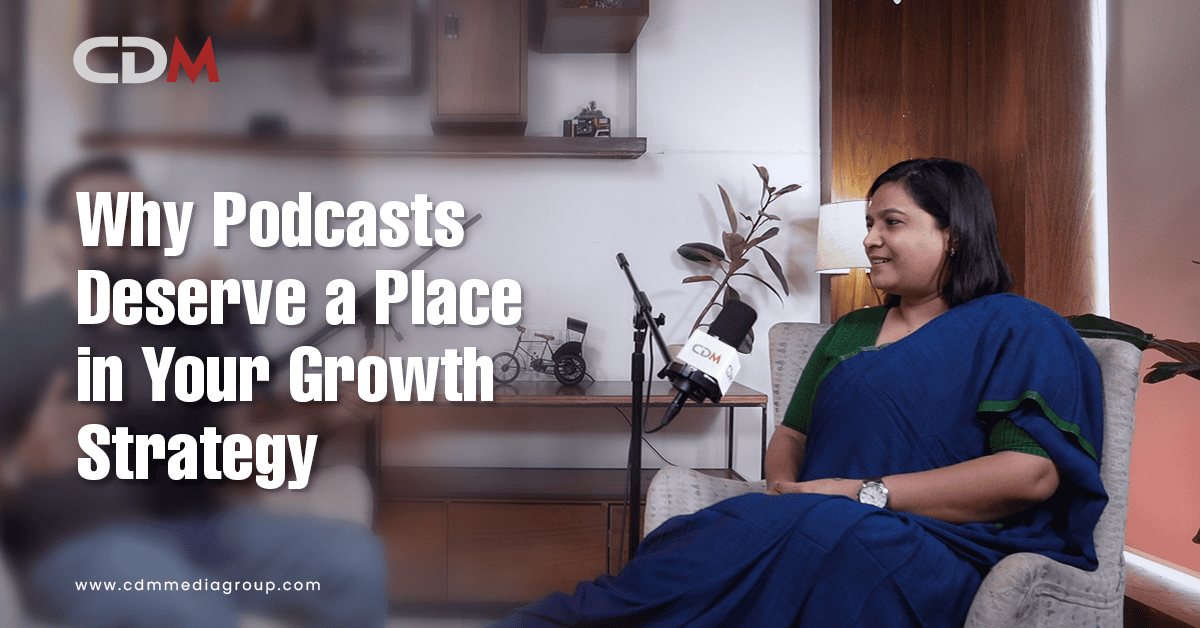
Podcasting has become an increasingly important channel for brands looking to build awareness and consideration. Research from BBC World Service found that podcast advertising increased brand awareness by 89% and brand consideration by 57%.
For B2B companies, however, the opportunity goes beyond advertising. A branded podcast can create an ongoing platform for conversations with industry experts, customers, partners, and potential buyers. Many B2B companies approach podcasting primarily as a content initiative: launch a show, book guests, publish episodes, and hope the audience follows.
The problem isn’t the format. It’s that B2B podcasts are often built around downloads and publishing consistency rather than a strategy that connects content to actual buying decisions.
A B2B podcast built for authority and pipeline starts with the buyer, not the guest list: who they are, what questions they are already asking, and where they are in the decision-making process. Every episode is mapped to a sales stage, distributed with intent, and repurposed for outreach.
B2B Podcast Marketing Really Means
B2B buyers now spend hours listening to podcasts before they ever take a sales call, which is exactly why podcasts have become one of the most important parts of B2B marketing. Unlike general-interest podcasts that cover a broad mix of topics, B2B podcasts stay focused on the specific challenges, trends, and insights that matter most to a particular business sector.
How a B2B Podcast Can Contribute to Pipeline
Here’s what actually happens when B2B marketing and sales teams stop treating their podcast as a strategy and a demand engine:
- A podcast gives prospects an opportunity to engage with your expertise before a sales conversation begins, creating a warmer context than a first-touch promotional message.
- A target account can encounter your brand multiple times throughout the episode, clips, social posts, and repurposed content before your sales conversation begins.
- By the time someone books a call, they’ve usually already formed an opinion of your company, and a lot of the “convincing” work is already done.
- Breaking one episode into LinkedIn posts, YouTube clips, and blog content means the show keeps working long after the original drop, not just inside a podcast app.
- Done consistently, with the right guests and a clear editorial point of view, the podcast can become a repeatable thought-leadership channel.
- None of it moves the pipeline unless it’s wired into your actual system, guest picks, CTAs, UTM links, and CRM data, so you can trace results instead of just assuming the podcast drives pipeline.
B2B Podcast Strategy That Drives Pipeline
Great conversations alone won’t make a B2B podcast succeed. It also needs a clear distribution strategy, easy-to-find content, measurable performance, and CTAs that actually push listeners to act.
Here’s a simple five-step framework to turn your podcast into a channel that drives real pipeline.
Step 1: Buyer + Content Strategy
Define the buyer and content strategy.
Before you record anything, just simplify these two things:
Define your buyer. Simplify your buyers with their job title, position, and department. Not “marketers,” but ‘VP or Director of Demand Gen at B2B SaaS companies with 200+ employees.’ Look at your closed-won deals, identify who actually changed the purchase decision, and then check what they asked during sales calls.
Define your content strategy. Pick a fixed ratio of episode types before you plan a single title. Try 3 industry-trend or peer-interview episodes to 1 customer case study or objection-handling episode per month. Write the ratio down and stick to it. Skip this, and most B2B podcasts turn into founder-interview filler or product pitches by episode 10.
Step 2: Build a Distribution Plan Before You Publish
Don’t spread yourself across every platform; go where your B2B audience actually spends time. For many B2B brands, LinkedIn and YouTube can play an important role in discovery and distribution, while podcast platforms such as Spotify remain important listening destinations. The right mix depends on where the target audience actually consumes content.
Step 3: Make Every Episode Page Work for Search and Conversion
Make every episode easier to find through search.
Search engines can’t listen, so give them something to read. Then use target keywords in titles, show notes, headings, and URLs, and include a full transcript so the content actually gets indexed. Then embed the YouTube version right on the page and write it like a real landing page: clear copy, internal links, and a CTA that actually asks for something.
Do this consistently, and each episode stops being a one-time upload and becomes a long-term content asset that keeps bringing in traffic.
Step 4: Create Clips That Earn Attention, Not Just Views
Turn every episode into short-form clips that grab attention and pull listeners back to the full show.
Hero Clips: 60–120 second highlights for YouTube and social media.
Micro Moments: 15–30 second clips for LinkedIn, stories, and other social platforms.
Match Clips to the Funnel
- Early-stage clips: lead with industry data and trends, no pitch needed.
- Mid-stage clips: show real problems getting solved to build credibility.
- Late-stage clips: close with outcomes, customer feedback, and results.
Step 5: Set Up Attribution & UTM Tracking
Don’t judge a podcast by downloads alone. Track how it actually moves your pipeline forward.
- Tag every episode, clip, and guest-share link with UTM parameters.
- Stick to a consistent UTM naming convention across all of them.
- Feed that tracking data directly into your CRM.
- Track clicks, leads, meetings booked, and revenue influenced.
- Use dashboards to spot which content is actually driving results.
As a result, podcast activity can be connected to concrete business results.
Step 6: Add Conversion CTAs That Match Funnel Stages
Every episode should leave listeners with a clear next step, one that matches their level of investment.
- Don’t just end the episode with ‘thanks for tuning in’; nobody remembers that five minutes later. Tell people exactly what to do next. Something like ‘the template we talked about is in the show notes’ or ‘DM if you want the slides.’ Give them one clear thing to act on, not a polite goodbye.
- Back it up with visual CTAs on your show page, social posts, and YouTube clips, so it’s obvious what to do next, no matter where someone encounters the episode.
- Asking for a sale call one minute in is way too soon; match the CTA to how far along the listener actually is.
- Keep it simple, give people something real to do, and make sure it actually connects to the rest of your content plan instead of feeling stuck on its own.
- Don’t just throw a CTA in and hope for the best; track clicks, conversions, and revenue so you actually know what’s working.
Lead Generation Gap in B2B Podcasting
A show can have strong content and still lose momentum after a relaunch. Often, the challenge isn’t the content itself, but the systems and processes behind it that keep everything moving.
Here’s where most shows actually break down:
- Episodes recorded in bulk, then forgotten about for months
- Guests booked once and were never followed up with for referrals or repeat appearances
- No one owns the podcast after launch, so nothing gets updated
- Clips and repurposed content pile up in a folder instead of going out
- Success gets measured by ‘did we publish,’ not by anything tied to revenue
Podcasts hold real potential for engaging audiences, with roughly 80% of listeners tuning in for more than seven hours a week, about an hour a day. Yet for many B2B podcasts, where sustained attention doesn’t translate into qualified leads, getting a consistent gap between engagement and conversion.

Final Takeaway
A B2B podcast becomes a growth channel when it is connected to the rest of the marketing and sales system. The goal isn’t simply to produce good conversations. It is to put those conversations in front of the right buyers, turn them into useful content across channels, and measure their contribution to engagement, opportunities, and pipeline.
CDM Media Group helps B2B brands turn executive conversations into strategic content, thought leadership, and demand-generation assets across channels.
Contact us today!
FAQs
1. Can a B2B podcast really generate leads?
Yes. A B2B podcast can generate leads by reaching target buyers, building trust, and driving them to demos, downloads, or other conversion points.
2. How long before a B2B podcast generates leads?
There is no fixed universal timeline. Lead generation depends on audience relevance, distribution, consistency, content quality, and buying-cycle length.
3. What is the best way to use a podcast for B2B lead generation?
Invite perfect prospects as guests, share valuable insights, and repurpose episodes across LinkedIn, YouTube, and other channels.
4. Should I measure podcast downloads for lead generation?
Not alone; focus on leads, conversions, branded searches, sales conversations, and pipeline improved by the podcast.
5. Does a B2B podcast need a large audience to generate leads?
No. A smaller, highly relevant audience of potential buyers can generate more business than a large but disengaged audience.