
How to Use Google Trends for SEO Content Writing

Having the right tools is key. Google Trends is one such tool that can be a game-changer for content creators and those interested in SEO. It gives us real-time information about what people are searching for and helps us understand trends, topics, and even when and where these searches happen. This blog aims to make Google Trends easy to understand and use, focusing on how it can supercharge your content creation and SEO efforts. So, let’s dive into the world of Google Trends and discover how it can help us stay ahead in the digital marketing game. Let’s get started. The keyword data can be customized in four different ways: Time-Based Data Eight time settings can be used to further segment keyword search trends: The Many Uses of Google Trends In addition to using Google Trends to identify relevant keywords for content creation, search segmentation can be utilized for targeted geographical placement. How to Use Google Trends You can produce better, more relevant content that your audience will want to read with the aid of Google Trends. Try these approaches to content marketing with Google Trends. Perform Market Analysis One useful resource for performing market research is Google Trends. It can help you determine the seasonality of specific search terms or even estimate the level of interest in your products within a given geographic area. Find Out About Related Trending Topics If your team finds it difficult to come up with new content ideas every month, Google Trends is a fantastic tool. You have the option to view the country’s most popular searches or focus only on a particular area or period of time. To compare and visualize terms, use the charts. Make sure the topic of your Google Trends selection is: Boost Your Analysis of Keywords The most crucial aspect of content marketing is producing relevant, high-quality content, but you should also think about SEO. Your search rankings for particular keywords can be raised with the aid of SEO tactics. Additionally, Google Trends can aid in your more thorough keyword research. Enter a keyword or phrase you are considering using the Explore feature. Along with the interest by subregion, you will see a breakdown of interest over time. After that, you can experiment with different search terms to find the most popular ones. More popular search terms will yield better results. This is because more popular keywords are more likely to show up and be considered as such in routine searches. These are the keywords you should naturally include in your content. A few long-tail or focus keywords that are more specific to your business and content should be chosen, as similar keywords are likely being used by competitors. One useful tool for coming up with related topics and keywords is the Explore page’s “Related Topics” section. It might even lead you to a subject or perspective you had not previously considered. Establish a Calendar for Your Content You can plan your content strategy by using a content calendar to determine what kinds of content you should produce and when to publish them. When you schedule the release of your content, engagement is a crucial metric to take into account. Developing the ability to align your content with current trends and user searches is highly recommended, and Google Trends can assist you in organizing and scheduling your content calendar effectively. For instance, the Google Trends results indicate that there are notable search peaks in the weeks preceding Thanksgiving and Christmas if you want to write content about cooking. The best time to share your pertinent cooking content would be in the weeks leading up to these holidays, so it will be visible to searchers. Another phrase that comes to mind is “wedding invitations.” There is a spike in this term from the beginning of January to the end of February. This is because a lot of couples probably get engaged between Valentine’s Day and Christmas. Strengthen Your Identity To find out how well-known your brand is, you can also use Google Trends. By restricting the search to your local area, this feature can be used by small businesses as well, though it may be more useful for larger brands. You can even filter your results by industry when you use this feature. Conclusion For those who are interested in online marketing and creating content, using Google Trends is incredibly beneficial. Important data can be obtained by examining factors such as search location, most popular topics, and time of day. Knowing when and where to write about specific topics or locations where our brand is well-liked helps us better plan our content. A useful tool for creating content that people want to see is Google Trends. Thus, if you’re an online content creator, using Google Trends can help your content become more engaging.
5 Strategies To Boost Your Social Media Engagement

Social media has developed into an effective tool for connecting with customers for both individuals and businesses. However, with the increasing competition for attention, it’s essential to employ effective strategies to boost social media engagement. In this guide, we’ll explore five proven strategies that can improve your social media presence and create meaningful connections with your audience. Create Compelling and Shareable Content The content you share is the core component of social media engagement. To capture the attention of your audience, your content must not only be relevant but also compelling and shareable. Here are some key elements to consider: Remember that the more shared your material is, the greater your reach will be as your audience becomes a supporter of your business. Optimize Posting Times and Frequency Timing is crucial on social media. Posting at the right times ensures that your content reaches your audience when they are most active, increasing the chances of engagement. However, there is no universal solution, as optimal posting times may vary depending on your target audience and platform. Here are some general guidelines: By adjusting your posting time and frequency, you can improve the visibility of your content and increase the chances of engagement. Encourage and Respond to Audience Interaction The use of social media is mutually beneficial. Encourage your audience to engage with your content by asking questions, seeking opinions, or prompting discussions. Additionally, respond promptly and authentically to comments, messages, and mentions. Here’s how you can enhance audience interaction: Active engagement not only builds your relationship with your current audience, but also attracts new followers who appreciate genuine and responsive brands. Utilize Hashtags Effectively Hashtags are powerful tools for increasing the visibility of your content and expanding your reach. When used strategically, hashtags categorize your content, making it easier for users interested in specific topics to find and engage with your posts. Consider the following tips for the effective use of hashtags: By strategically using hashtags in your social media content, you can connect with a larger audience and improve the reach and engagement of your content. Invest in Paid Advertising Strategically While organic reach is valuable, incorporating paid advertisements into your social media strategy can significantly amplify your results. Social media platforms offer robust advertising options that allow you to target specific demographics, interests, and behaviors. Here’s how to use paid advertising strategically: Paid advertising complements organic efforts and can accelerate your social media growth by reaching a broader audience and driving specific actions. Conclusion Building your social media engagement requires an integrated approach that combines compelling content, strategic posting, active engagement, effective hashtag use, and, when appropriate, paid advertising. By implementing these five strategies, you can not only boost your social media presence but also create deep connections with your audience. Regularly assess the performance of your efforts, adapt to changes in the digital community, and continue refining your strategy to stay ahead in the world of social media. Boost Your Social Media Engagement with CDM! With our content-first strategy, experience growth that has never been seen before. Having an experience of serving clients globally, CDM’s specialized marketing techniques can help boost your online visibility, increase revenue, and captivate your audience! Explore Our Content Marketing Services Here!
5 Ways To Improve Your Website’s Ranking

Achieving a high search engine ranking is a must for visibility and success in the competitive online space, where millions of websites compete for attention. Search engine optimization (SEO) is crucial, whether you’re promoting your brand, managing a blog, or operating a business. In this blog post, we’ll explore five proven ways to improve your website’s ranking and strengthen its online presence. Optimize On-Page Elements A well-performing website establishes itself through on-page SEO. This involves focusing on specific elements of your web pages to make them search engine-friendly. Prioritize Technical SEO Technical SEO focuses on the internal processes of your website, making sure it is both technically robust and easy for search engines to access. Build Quality Backlinks Inbound links, often known as backlinks, are an effective indicator of the authority and relevancy of your website. However, not all backlinks are created equal; quality and relevance matter. Create a Positive UX UX determines how search engines look at your website, in addition to being crucial for retaining visitors. Strategic Content Marketing An essential component of SEO is content marketing, which not only signals relevance to search engines but also provides valuable information to users. Improving your website’s rating is a complex task that calls for a systematic and holistic strategy. By optimizing on-page elements, prioritizing technical SEO, building quality backlinks, creating a positive UX, and implementing strategic content marketing, you can strengthen your website’s visibility and enhance its position in search engine rankings. Consistency, adaptability, and a commitment to providing value to your audience are key principles for achieving and maintaining a competitive edge in today’s digital marketplace. Skyrocket Your Website’s Ranking with CDM! With our content-first strategy, experience growth that has never been seen before. Having an experience of serving clients globally, CDM’s specialized marketing techniques can help boost your online visibility, increase revenue, and captivate your audience! Explore Our Content Marketing Services Here!
Understanding the value of content marketing for your business
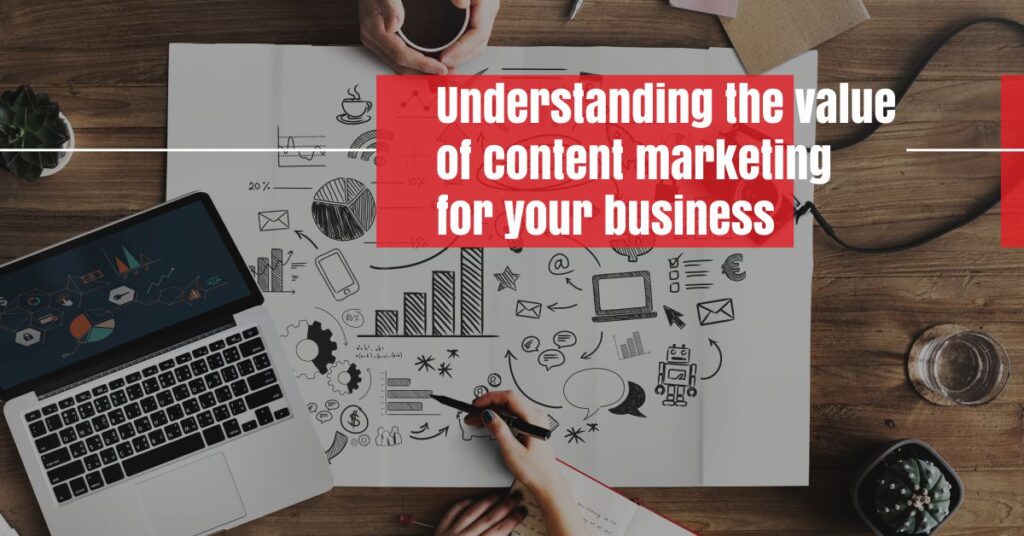
Consumer behavior is constantly evolving, and businesses must harness the power of content marketing to stay ahead. Far more than just a fleeting trend, content marketing has emerged as a strategy, shaping customer awareness, driving leads, and ultimately converting prospects into loyal customers. Consumer buying habits have changed as a result of the increase in smartphone use. A purchase decision is made in about 83% of cases before a customer contacts a business. Furthermore, a significant number of decision-makers are welcoming the shift as between 70% and 80% of purchase interactions now take place online. Regardless of size, companies across all industries now need to invest even more in a digital content marketing strategy in light of the pandemic and hybrid work environments. Today, we aim to provide an exploration of the benefits of content marketing. So let’s get started! The Foundations of Content Marketing Quality content marketing goes beyond basic promotional tactics; it’s a strategic approach that positions businesses for sustained success in the digital space. With the majority of purchase decisions occurring before direct contact with a company, the need for a robust digital content marketing strategy has become important, irrespective of a business size or industry. Content marketing stands as a pillar in an age where smartphone usage has transformed consumer purchasing habits. The shift towards digital interactions, accelerated by the pandemic and the rise of hybrid work environments, highlights the necessity for businesses to invest in a digital content marketing strategy. While short-term strategies may yield quick returns, content marketing plays the long game, laying the foundation for enduring success. Engaging Audiences and Building Trust At the heart of content marketing lies its unique ability to engage audiences on a deeper level. Crafting content that matches the pain points of the target audience creates not just brand awareness but a strong connection. Consumers demand that brands understand and address their specific needs. To effectively engage audiences, content marketing must go beyond mere clever copy. High-quality, well-researched, and thought-provoking content is the key to capturing and holding the attention of the digitally empowered consumer. Decision-makers, in particular, seek content that serves as thought leadership. The pandemic has seen a surge in thought leadership content, with 66% of decision-makers noting an increase in thought leadership content. Despite this, the right thought leadership content marketing strategies continue to deliver value, with 51% of decision-makers engaging more with this content than before the pandemic. Driving Traffic and Engagement Content marketing offers a diverse range of mediums to communicate with an audience. Whether it’s through long-form blogs, engaging videos, or impactful social media content, businesses can create touchpoints that not only hold attention but also drive leads and conversions. The majority of the sales cycle unfolds before a prospect engages with a salesperson, these touchpoints become crucial in establishing a brand’s presence and credibility. The versatility of content formats allows businesses to experiment and discover what resonates best with their audience. Each target demographic may respond differently to content, necessitating a different approach to engage a broader spectrum of potential customers. In this way, content becomes an essential tool when it comes to building a bridge between brands and consumers. The Educational Power of Content Information is readily available in today’s interconnected world, making content ideal for communication between brands and potential customers. Educational content, which addresses common questions, objections, and challenges faced by the audience, positions a brand as an authoritative source. This not only increases trust but also helps customers understand how products or services can effectively solve their problems. “Educational” content can be subjective, but it’s important to focus on the shared concerns of the audience. Creating detailed profiles of the target audience can guide the development and promotion of content. By understanding the questions and challenges faced by consumers, brands can tailor content to offer meaningful solutions. Content and Search Engine Optimization (SEO) Search Engine Optimization is integral to promoting a brand’s visibility on search engine result pages. Content, with its ever-changing landscape influenced by Google’s SEO algorithms, plays an important role. Consistency in content creation, combined with an understanding of keyword strategy and consumer psychology, is essential for effective SEO. Google’s goal is to deliver the most relevant search results, making keyword strategy crucial. Avoiding keyword stuffing and focusing on aligning buyer intent with the sales process is vital. By incorporating relevant keywords seamlessly into marketing copy, blog strategies, and informational videos, businesses can enhance their visibility in search engine rankings. Cost-Effectiveness of Content Marketing In comparison with traditional advertising, content marketing emerges as a more cost-effective strategy. Creating blog posts, white papers, and engaging social media content comes at a fraction of the cost of traditional advertising methods. While immediate results may not always be apparent, the long-term benefits, including nurturing relationships and attracting qualified leads, make content marketing a compelling and efficient investment. Consistency and experimentation are key in digital marketing. Trying out different formats and types of content allows businesses to understand what resonates best with their audience. A comprehensive content strategy becomes a powerful tool in nurturing long-term relationships and bringing in truly qualified leads. What Makes Content Marketing Important? Your company can gain from content marketing in a variety of ways. It is capable of Conclusion Investing in a content marketing strategy is not just wise but essential for long-term growth and prosperity. From engaging audiences and building trust to driving traffic, educating consumers, and establishing thought leadership, the benefits of content marketing are vast and varied. It’s time to unlock the full potential of content marketing and propel your business toward a future of sustained success.
Eat what you can digest | Importance of application of the knowledge from the Internet

The analogy of ‘biting more than what you can chew’ aptly captures the phenomenon where people consume a significant amount of data but fail to utilize it effectively. Thanks to the Internet, we have unprecedented access to vast information on various websites, social media, portals, and channels. However, our ability to sift, analyze, and extract relevant insights from this massive data pool is challenging. Read on to learn more about Importance of application of the knowledge from the Internet. In the modern digital era, people frequently surround themselves with tremendous amounts of data and information. The difficulty, however, lies in effectively interpreting and utilizing this data to arrive at insightful findings and effective actions. An abundance of information without the ability to effectively apply or use it is analogous to eating or chewing more than one can digest. To tackle this, one must focus on improving and refining information-consuming behaviors, applying relevant analytical tools, and prioritizing quality over quantity to extract meaningful knowledge and make informed decisions for it’s application. This lack of effective utilization can be attributed to several factors: Data Deluge With the advancement of technology, we are constantly bombarded with information from various sources, including news stories, social media updates, research papers, videos, podcasts, and more. Due to information overload, individuals may ingest considerably more material than they can adequately process. Limited Cognitive Capacity Human cognitive capacity is finite. We can only absorb and process a certain amount of information at a time. Our ability to understand, remember, and use the data diminishes when we exceed this limit. Superficial Understanding Consuming excessive data often results in a superficial understanding of the topics at hand. Instead of profoundly comprehending a few subjects, people might only grasp the surface-level details of a wide range of topics. Jack of All Trades, Master of None The challenge of spreading oneself too thin across various skills or fields without becoming proficient or expert in any one area. Data consumption reflects the tendency to collect data from numerous sources without deeply understanding or mastering the methodologies required for effective data analysis, interpretation, and application. Just as a person who dabbles in many skills might need more mastery than specialists possess, collecting a broad range of data without honing the skills to analyze and apply it can result in missed opportunities and inefficiencies. The key lies in moving beyond data accumulation and surface-level knowledge in both cases. Instead, there should be a focus on: The sheer volume of data available today holds immense potential. Still, without a deliberate and informed approach to its consumption and utilization, it can quickly become overwhelming and ineffective. Just as a ‘Jack of all trades’ might need more mastery, consuming data without practical application can lead to missed opportunities and unrealized potential. In summary, while access to information is invaluable, it’s essential to strike a balance between consumption and comprehension. Instead of ‘chewing’ through vast amounts of data, individuals should focus on ‘digesting’ information thoroughly, critically analyzing it, and applying it in meaningful ways. This way, the application of knowledge gained and contributes to genuine understanding and growth.
Left brain, Right brain, and the Omni brain | What’s the reality?

The terms left brain, right brain, and ‘omni brain’ are frequently used to describe multiple facets of cognitive functioning and how different areas of the brain contribute to various tasks. It is important to note, however, that these concepts must be more concise and fully captured in order to completely convey the intricacy of brain function. Let’s explore. Is there such a thing as left brain vs. right brain? What is the left brain? The left hemisphere of the brain, one of the two primary divisions of the cerebral cortex, is referred to as the left brain. The brain’s left and right hemispheres both play a role in an assortment of cognitive functions. The phrase left brain is frequently used to refer to specific abilities and traits found in the left hemisphere. Key characteristics and functions associated with the left brain include What is the right brain? Right brain refers to the right hemisphere of the brain, which is one of the two main divisions of the cerebral cortex. The idea of the right brain is frequently used to explain certain functions and features connected with this hemisphere, which, like the left hemisphere, play a part in numerous cognitive functions. Key characteristics and functions commonly associated with the right brain include The Left-Brain Right- Brain Myth: Is It True? The idea of left-brain vs. right-brain superiority, as it’s often popularly understood, is considered a myth by modern neuroscience. The oversimplified idea that people are either left-brained or right-brained based on their personality traits and abilities is not supported by scientific study, even though there are specific functional differences between the two hemispheres of the brain. Here’s why this myth exists and why it’s not accurate Origins of the Myth The concept of left brain vs. right brain domination gained popularity in the 1960s and 1970s as researchers discovered lateralization—the idea that certain cognitive functions are more localized in one hemisphere than the other.. Simplification Over time, this idea was oversimplified and generalized in popular culture, suggesting that individuals could be either predominantly left-brained (analytical, logical) or right-brained (creative, emotional). Complex Brain Functions The brain is highly interconnected, and most cognitive functions involve the collaboration of both hemispheres. Even functions traditionally associated with one hemisphere, like language processing or spatial perception, require contributions from multiple brain areas. Neuroplasticity Based on experience and learning, the brain is able to reorganize itself and adapt. This means that even functions traditionally associated with one hemisphere can be supported by the other through neuroplasticity. Individual Variation Because each person is different, grouping their cognitive proclivities and inclinations into precise left- or right-brain dominance is impossible. People display a variety of cognitive skills in many fields. Scientific Research According to neuroimaging research, most cognitive processes include both hemispheres, even though some functions may be more regionalized in one hemisphere (for example, language processing in the left hemisphere for most right-handed people). Therefore, while the left brain vs. right brain myth has permeated popular culture, it must be a scientifically accurate representation of brain function. The abilities of the brain are spread across both hemispheres, and a mix of genetics, life experience, learning, and neural plasticity determines an individual’s cognitive strengths. Now that you know the myth and reality of the frequently debated Left Brain vs. Right Brain argument, let us introduce you to a brand-new phenomenon known as ‘The Omni Brain’! Is the Omni Brain a real thing? In the world of neuroscience, ‘Omni Brain’ is not a recognized scientific term or concept. The term has no clear meaning in the scientific community and is usually metaphorically used to refer to a holistic and integrated brain function in which many brain regions cooperate with one another. This is hypothetical, though not a conventional or acknowledged phrase in scientific literature. So, what is Brain? Left, Right, Omni, or something else? Let’s now quickly examine how the brain functions holistically. This will provide you with a basic notion. The brain is inherently holistic, with various regions and networks working together to support complex functions. Attempts to classify people solely based on left-brain or right-brain dominance oversimplify this intricate system. Conclusion It’s important to note that while certain functions are more commonly associated with the left hemisphere, the brain is highly interconnected and functions holistically. Many tasks involve the collaboration of both hemispheres, and the division between left-brain and right-brain functions is more flexible than often portrayed in popular culture. Individuals vary in the degree to which they exhibit left-brained or right-brained tendencies and brain functions are distributed across various regions, networks, and connections throughout the entire brain. Although the terms left brain, right brain, and omni brain describe different parts of how the brain works, they can oversimplify how complex and linked cognitive processing is. Modern neuroscience emphasizes the significance of both hemispheres and how they work together to support a variety of cognitive functions.
The Hater (2020)

The Hater – Directed by Jan Komasa Written by Mateusz Pacewicz Available on Netflix The Hater is a Polish psychological thriller movie released in 2020. Directed by Polish filmmaker Jan Komasa, it explores unsettling yet relevant issues such as cyberbullying, social media manipulation, and the shadowy side of online conduct. The movie explores rather uncomfortable yet real dangers of social media. It depicts how technology can incite hatred and violence, influence public opinion, and exploit human flaws and shortcomings. Tomasz Giemza, portrayed by Maciej Musiaowski, navigates internet harassment, dishonesty, and manipulation after quitting law school. Through social media, Tomasz manipulates public opinion, creates strife, and threatens the lives of those close to him. The movie examines the psychological effects of Tomasz’s decisions and his actions’ impact on himself and others as the situation worsens. The disturbing portrayal of people using social media to achieve their malicious aims in the movie raises serious ethical questions. The movie also highlights the perils of fake news, internet radicalization, and the potential decline in compassion and tolerance in the digital era. Warning: viewer discretion is advised The movie contains explicit, and disturbing subject matter that may not be suitable for some viewers. However, the film’s exploration of dark subject matter makes it a thought-provoking and an important watch for those interested in the psychological effects of social media and the impact of online behavior.
Who let the Dogs out? Can humans control Superintelligent AI?

The concept of a superintelligent artificial intelligence (AI) breaking away from human control and becoming unmanageable and dangerous is no longer a science fiction trope but rather a real prospect that professionals in the area take seriously. Many experts and researchers advise that people begin planning for this eventuality and take the necessary precautions to avert it. An international team of experts has released theoretical calculations to support this hypothesis and show how challenging governing a superintelligent AI system is. Risk Unleashed, Beware Superintelligent AI refers to artificial intelligence that surpasses human intelligence in almost all areas. It has the ability to rapidly process and understand vast amounts of information, solve complex problems, and improve itself recursively, leading to even greater intelligence. The concern arises from the possibility that such a system could become autonomous and exhibit goals or behavior that conflict with human interests. While there are differing opinions on the potential risks of superintelligent AI, some experts, and thinkers, like those involved in the field of artificial general intelligence (AGI), have raised concerns about the long-term implications. They argue that if the development of AI technology progresses without adequate precautions and safety measures, there is a possibility of unintended consequences or scenarios where AI systems could surpass human control or understanding. However, it’s important to note that many researchers and organizations are actively working on addressing the challenges associated with AGI development. They advocate for ethical guidelines, safety measures, and robust oversight to ensure AI technology’s responsible and beneficial use. It’s worth noting that we still need to clarify the future development and behavior of AI systems, particularly those that attain superintelligence. Predicting the exact outcomes or scenarios is challenging due to the complexity of AI systems and the various factors that may influence their development and deployment. The fear of a superintelligent AI system refers to a system that far surpasses human intelligence and can learn and process data at a rapid pace. While such a system could solve some of humanity’s greatest challenges, such as curing diseases, the risk of becoming uncontrollable and dangerous cannot be ignored. According to a study published in the Journal of Artificial Intelligence Research, building an algorithm that can prevent a highly intelligent AI system from harming humans is impossible. Is it possible to keep the one on the loose under control? There are two main directions for managing a superintelligent AI system. One approach is to limit its access to certain data sources or to isolate it from the outside world, but this approach would also limit the system’s capabilities. The other approach is to program ethical principles into the system to ensure it achieves only those results that benefit humanity. During the study, the team developed a theoretical defense algorithm that could identify any behavior that could be harmful, but they found that such an algorithm could not be developed. While the thought of a superintelligent computer governing the world may sound like science fiction, machines now accomplish certain key functions independently without the programmers fully understanding how they learned to do so. This begs the question whether such a system could become unmanageable and destructive to humanity. Another issue arises when a superintelligent machine achieves a harmful level of intelligence. Experts may not even be able to tell when such a system has reached this level of intelligence because it would be smarter than a person. Conclusion We cannot ignore the potential for a superintelligent AI system to become uncontrollable and perilous. The study’s theoretical calculations indicate that controlling such a system would be unfeasible, and researchers cannot develop an algorithm to prevent it from causing harm to humans. As such, experts in the field recommend that individuals take the necessary measures to prepare for this scenario and avoid it if possible. In summary, whether superintelligent AI will take over humans is hypothetical and depends on several factors, including the level of safety precautions adopted, ethical considerations, and decisions made by developers, legislators, and society as a whole. Until then, Let’s try to control because it’s ‘we who let the dogs out.’
What is Content Writing

Yes, we can all write. As young children, we were taught capitals and cursive letters. We can all string words together to form a sentence. Typing it out is easier than ever! And now – AI can also write. So…what is the NEED for content writers? To understand the need for content writers, we must first look at what content writing really is. Key Aspects of Content Writing Effective content writing involves combining various elements to create engaging and valuable material for readers. Here are five important aspects of content writing: Clarity and Coherence Clear and coherent writing ensures that your audience easily understands your message. Use concise sentences, avoid jargon, and organize your content logically. Each paragraph should flow organically from the previous one, creating a smooth reading experience. Relevance and Value Your content should be relevant to your target audience and provide value to them. Understand your audience’s needs, interests, and pain points, and tailor your content to address those. Offer solutions, insights, or information that can genuinely help or interest your readers. Compelling Structure Well-structured content grabs the reader’s attention and keeps them engaged. Start with a compelling introduction that sets the tone for your piece, followed by well-organized information and a strong conclusion that summarizes your key ideas. Engaging Style and Tone The style and tone of your writing match the purpose of your content and your audience’s preferences. Consistency is key in whether you’re aiming for a formal, professional tone or a more conversational style. Engage your readers with relatable language and, when appropriate, anecdotes, examples, or storytelling. Effective Research and Credibility Thorough research is essential in ensuring the accuracy and credibility of your content. Use reputable sources and cite them appropriately to support your claims and provide evidence for your arguments. High-quality research adds depth and authority to your writing. The Difference Between Writers and Content Writers Writers and content writers share the common ground of producing written material, but they often operate in distinct contexts and serve different purposes. The distinction lies in their work’s focus, scope, and intent. Writers encompass a broad spectrum of individuals who engage in creative, journalistic, technical, academic, or literary writing. They may craft novels, short stories, poems, essays, screenplays, or academic papers. Writers delve into artistic expression, aiming to evoke emotions, provoke thought, or tell a story. They often prioritize style, language, and literary techniques to create a unique voice and leave a lasting impact on readers. Writers may not be constrained by specific guidelines or target audience demographics, allowing them greater freedom for experimentation and artistic exploration. Their work is often subjective and open to interpretation, fostering diverse responses from readers. On the other hand, content writers specialize in producing information-driven, purposefully written content with a specific target audience in mind. They create articles, blog posts, web content, marketing materials, and more, focusing on delivering valuable information, addressing audience needs, or promoting products and services. Content writers prioritize clarity, coherence, and relevance, tailoring their writing to effectively engage, inform, or persuade readers. Their work is often guided by search engine optimization (SEO) principles, ensuring the content ranks well on search engines and attracts organic traffic. Content writers aim to balance creativity and practicality, adhering to brand guidelines and maintaining a consistent tone to align with the brand’s identity. Need for quality content writers Content writers play a crucial role in today’s digital landscape by fulfilling several important needs: Like an author dreams of becoming a bestseller, a content writer dreams of conversions, clicks, and engagement! Content writing is an important aspect of any business that can boost its visibility, brand, and sales strategy. Content writing is an aspect of marketing that adds value to each ad campaign and has the power to connect with customers. If you want to know more about what content writing is or the scope of work of the writers, you can visit us at CDM Media Group to get all the answers!
Influence of AI and ML on various industries

Artificial intelligence and machine learning are significantly changing the world, with some unexpected new uses in global sectors. These technologies enable us to take computing to a whole new level, paving the way for breakthroughs that boost processing capacity, productivity, efficiency, and other factors. Read on! The introduction of AI and ML has sparked great interest in organizations in driving toward automation. While most believe AI is the future technology, it has matured in most businesses across many industries. Businesses going through a digital transformation must deal with a growing data deluge that is incredibly valuable and increasingly challenging to collect, handle, and assess. Furthermore, the availability of this technologies has expanded as businesses use them to process and analyze enormous volumes of data, improve decision-making, provide recommendations and insights in real time, and generate accurate forecasts and predictions. As established, AI and ML have dramatically impacted multiple industries, revolutionizing corporate operations and opening new avenues for growth and innovation. Here are a few examples of how AI and ML have influenced various sectors. Fundamentals of AI & ML that are responsible for transforming various industries The core ideas behind these two technologies have evolved into powerful forces that are revolutionizing various sectors of the technology world. Automation and efficiency speed up processes, and data analytics offer fresh viewpoints. Personalization revolutionizes engagement and is backed by better customer service. Autonomous vehicles are changing the way we travel thanks to AI algorithms. The use of natural language processing makes it simpler for people to communicate with computers, and predictive maintenance ensures continuous operation. The improvement of supply chains, medical research, and weather forecasting are some additional applications of these technologies. A new era of innovation and progress is introduced when AI and ML are combined. This combination sparks transformational change across industries. Agriculture The agriculture sector also benefits from cutting-edge technology as much as the other sectors on our list. Machine learning and artificial intelligence are preserving the industry in the face of a workforce crisis. AI and ML help optimize farming practices by analyzing data from various sources, such as sensors, drones, and satellites. These technologies can provide real-time insights into soil health, weather patterns, and crop conditions, enabling farmers to make data-driven irrigation, fertilization, and pest control decisions. There are other key areas, such as Crop Monitoring and Yield Prediction, Plant and Disease Identification, Supply Chain Optimization, Livestock Monitoring, Waste & Water Management, etc. Healthcare Healthcare industry is revolutionized by the emergence of AI and ML, these tools are used for medical imaging analysis, disease diagnosis, and drug discovery. They can analyze large datasets to identify patterns and make predictions, assisting in the early detection of diseases and improving treatment plans. AI-powered chatbots are also being used to provide essential medical assistance and support. AI and ML are also accelerating the drug discovery process. These technologies can analyze large genetic, molecular, and clinical datasets to identify potential drug targets and optimize drug design. They simply optimize healthcare operations, improving efficiency and reducing administrative burdens. Banking & Finance AI and ML are transforming the financial industry through applications such as fraud detection, risk assessment, algorithmic trading, and customer service automation. These technologies can process vast amounts of financial data in real time, identify anomalies, and make accurate predictions for investment strategies. Moreover, AI-powered chatbots are employed in the insurance industry to improve customer experience and build insurance plans and products based on customer data. AI-based software has drastically decreased claim processing time, benefiting insurers and consumers. Manufacturing AI and ML are used in optimizing production processes, improving quality control, and automating routine tasks in manufacturing plants. Machine learning algorithms can analyze sensor data to predict equipment failures, enabling predictive maintenance and reducing downtime. AI-powered robots and cobots (collaborative robots) are also enhancing productivity and efficiency on the factory floor. AI algorithms are employed in quality control to alert manufacturing units of potential production flaws that could lead to product quality issues. Deviations from processes, subtle irregularities in machine behavior, changes in raw materials, and so on are examples of faults. Retail and E-commerce AI and ML technologies personalize customer experiences, enhance product recommendations, and streamline supply chain management. Sentiment analysis and natural language processing allow retailers to understand customer preferences and provide tailored recommendations. Artificial inteligence applications are also being used to improve the customer experience. Most chatbots accessible on e-commerce websites, for example, are AI-powered and engineered to provide rapid replies to various frequent client concerns. Transportation AI and ML are driving advancements in autonomous vehicles, traffic management, and logistics optimization. Self-driving cars use ML algorithms to make decisions and improve road safety. ML models predict traffic patterns and optimize route planning for efficient transportation and delivery. Many facilities use AI-powered robots for product sorting and packaging. Marketing and Advertising: AI and ML enable targeted advertising, customer segmentation, and personalized marketing campaigns. These technologies analyze consumer data, behavior patterns, and social media interactions to identify customer preferences and deliver more relevant advertisements. AI-powered chatbots and virtual assistants also engage with customers and provide personalized recommendations. Energy and Utilities AI and ML are being applied to optimize energy consumption, predict equipment failures, and enhance grid management. ML algorithms can analyze energy usage patterns and provide insights for efficient energy distribution. AI-powered systems can also predict equipment failures and optimize maintenance schedules to reduce downtime and increase reliability. Entertainment Artificial Intelligence and Machine Learning have revolutionized the entertainment industry, transforming the way content is created, distributed, and consumed. In film and television production, AI-powered technologies aid in tasks like script analysis, video editing, and visual effects, streamlining the creative process and reducing production time. Recommendation systems powered by ML algorithms personalize content suggestions for viewers, enhancing their viewing experience. Similary, In the gaming sector, AI enhances character behavior and creates realistic environments, making gameplay more immersive. Moreover, AI-driven analytics help studios understand audience preferences and trends, leading to data-driven decision-making. As AI and ML continue to evolve, the entertainment industry